Children's dentistry
Pediatric Dentistry
Checkups, cleanings and early treatment for children, at the age when a calm first visit decides how they feel about dentists for a long time afterwards.
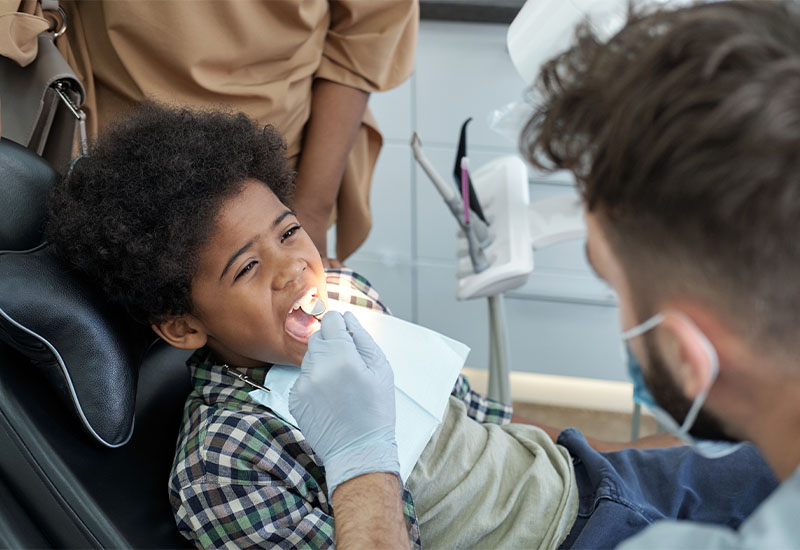
When to start and why
General guidance is that a child should see a dentist by their first birthday or within six months of the first tooth appearing. That first visit is mostly a look, a count and a conversation with the parent about brushing, bottles and diet. It is deliberately uneventful, because a child who has already sat in the chair once when nothing was wrong is far easier to treat later when something is.
Baby teeth matter even though they fall out. They hold space for the adult teeth behind them, and a baby tooth lost early to decay can let the neighbours drift into the gap, which is how a filling question becomes a crowding question years later. Decay in baby teeth also hurts, and a child in pain does not eat or sleep well.
At the appointment
A routine children's visit is an examination of the teeth and gums, a check on how the jaws are meeting, a cleaning, and X rays when they are needed to see between teeth that are touching. Fluoride varnish is often applied afterwards. Sealants, a thin coating painted into the grooves of the back teeth, are sometimes used on newly erupted molars because those grooves are where most childhood decay starts.
Bring the child's dental history and tell the office in advance if they are anxious, have had a bad experience, or have a medical condition. It is usually better for a parent to stay calm and quiet in the room than to narrate, because children take their reading of the situation from the adult.
Visits, Recovery and When to Call
Visits and timing
A checkup and cleaning is normally one appointment of around half an hour to an hour depending on age and cooperation. Twice yearly visits are the usual interval, more often if the child has had decay before.
Afterwards
There is nothing to recover from after a checkup. After a filling, the child will be numb for a couple of hours and needs watching so they do not chew their lip or cheek, which is the most common injury after children's dental work.
Call sooner if
A tooth is knocked out or pushed out of position, there is swelling of the face or gum, a child has pain that stops them sleeping, or a tooth turns dark after a knock. A knocked out adult tooth is time critical, so call straight away.
What actually prevents decay
Brushing twice a day with a fluoride toothpaste, an adult doing or checking the brushing until around age seven or eight, and keeping sugary drinks to mealtimes rather than sipping through the day. Frequency matters more than quantity: one dessert does less harm than the same sugar spread across six snacks.
Keep reading
Questions About Pediatric Dentistry?
Describe the problem on the phone. That conversation is usually enough to work out the first appointment. Mandarin, Taiwanese, English and Japanese are spoken.