Routine care
Teeth Cleaning and Checkups
The routine appointment that most dental care is built on: a look at everything, a clean, and an honest account of what has changed since last time.
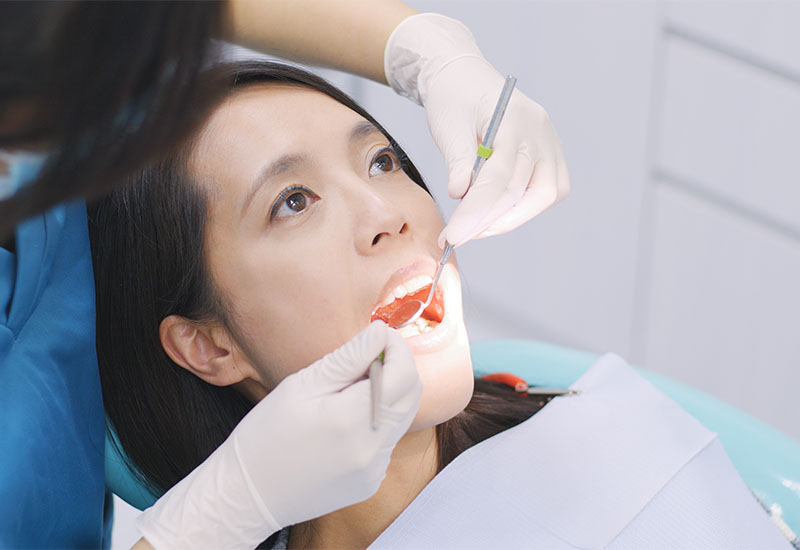
What a checkup is for
A checkup is an examination of the teeth, the gums, the bite and the soft tissues of the mouth, including the tongue, cheeks and palate. It is looking for decay that has not yet caused symptoms, gum inflammation, failing fillings and crowns, cracks, wear from grinding, and anything unusual in the soft tissue. X rays are taken at intervals because decay between two touching teeth is not visible from the outside.
The cleaning removes plaque and the hardened deposit called calculus that brushing cannot shift. Calculus builds up fastest on the inside of the lower front teeth and around the upper back teeth, which is where most people find it whatever they do at home. Once it is there it keeps a rough surface against the gum, which is what keeps the inflammation going.
At the appointment
The examination comes first, then any X rays that are due, then the cleaning. Deposits are removed with hand instruments or an ultrasonic scaler, and the teeth are polished afterwards. If gums are inflamed, cleaning them will make them bleed. That is the inflammation showing rather than damage being done, and it settles as the gums recover over the following days.
Tell the office about medications, medical conditions and pregnancy, and mention anything you have noticed yourself: a sensitive spot, a tooth that feels different when you bite, bleeding when you brush, a sore that has not healed. Patients notice things between visits that an examination twice a year will not necessarily catch on the day.
Visits, Recovery and When to Call
Visits and timing
One appointment, commonly around half an hour to an hour depending on how much deposit there is and whether X rays are being taken. Twice a year is the usual interval for most adults, though people with gum disease or a high decay rate are normally seen more often.
Afterwards
You can eat and drink straight away unless a treatment such as fluoride varnish says otherwise. Gums may be tender and bleed slightly for a day or two if there was a lot of deposit. Teeth can feel more sensitive to cold briefly, because surfaces that were covered are now exposed.
Call sooner if
Bleeding or soreness has not settled within a week, a tooth becomes sensitive to hot or lingers in pain after cold, or you find a lump, ulcer or white or red patch that has not healed in two weeks. Do not wait for the next scheduled checkup for any of those.
What happens between visits matters more
Two cleanings a year cover roughly an hour out of the year. The rest is brushing twice daily with fluoride toothpaste and cleaning between the teeth once a day with floss or interdental brushes, which is the part most commonly skipped and also where a lot of decay and gum disease starts. If you are not sure your technique is working, ask to be shown on your own mouth rather than in the abstract.
Keep reading
Questions About Teeth Cleaning and Checkups?
Describe the problem on the phone. That conversation is usually enough to work out the first appointment. Mandarin, Taiwanese, English and Japanese are spoken.