Alignment and bite
Orthodontics
Moving crowded, gapped or misaligned teeth into a position where they meet properly, with the timeline and the reasons explained before anything is fitted.
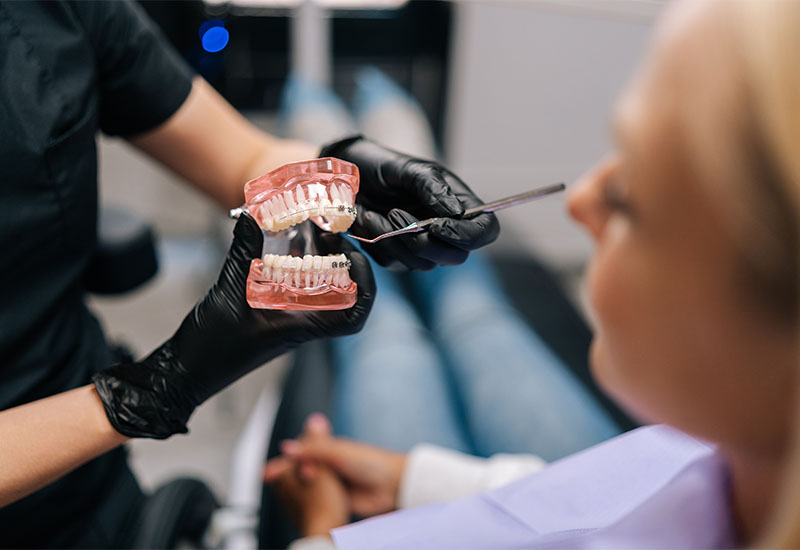
What orthodontic treatment does
Orthodontics applies light, continuous force to teeth so that the bone around them remodels and the teeth move. That is why it takes months rather than days. The appliance can be fixed braces bonded to the teeth, or a series of removable clear aligners, each one shaped slightly closer to the target position.
Crowding and misalignment are rarely only about appearance. Teeth that do not meet properly wear each other unevenly, and crowded teeth are harder to clean, which is how an alignment problem turns into a gum or decay problem later. A bite that is significantly off can also load the jaw joint in a way that becomes uncomfortable.
At the appointment
Treatment starts with records: an examination, X rays, photographs and impressions or a scan, so that what the bite is currently doing is documented before anything moves. From that comes a plan with a target, an appliance and an estimated length of treatment. Ask what the plan is trying to achieve and what happens if you do nothing, because both are fair questions.
Fitting fixed braces takes a longer appointment and is not painful, though it is fiddly and involves keeping the teeth dry. After that, visits are short adjustment appointments every few weeks. With aligners you change trays yourself on a schedule and come in periodically so progress can be checked against the plan.
Visits, Recovery and When to Call
Visits and timing
Orthodontic treatment is measured in months and often runs one to two years, depending on how far the teeth have to move. Adjustment visits are usually every four to eight weeks and are much shorter than the fitting appointment.
Afterwards
Teeth ache for two to four days after fitting and after each adjustment. Soft food and an over the counter painkiller cover it. Braces trap food, so cleaning takes longer and matters more. When active treatment finishes you wear a retainer, because teeth drift back if nothing holds them.
Call sooner if
A bracket comes loose, a wire is poking into your cheek, an aligner no longer seats properly, or a tooth becomes loose or painful in a way that is different from the usual ache after an adjustment.
Retainers are part of the treatment
The most common way orthodontic results are lost is by stopping retainer wear. Bone takes time to settle around teeth in their new position, and teeth continue to shift slowly throughout life regardless of treatment. Retainer wear usually tapers from full time to nights, but it does not stop being useful.
Keep reading
Questions About Orthodontics?
Describe the problem on the phone. That conversation is usually enough to work out the first appointment. Mandarin, Taiwanese, English and Japanese are spoken.