Fillings, crowns, veneers
Cosmetic and Restorative Dentistry
Putting structure back into a tooth that has decayed, cracked or worn down, and where you want it, shaping the repair so it does not show.
What the treatment covers
Restorative dentistry is the repair side of general practice. A filling replaces the part of a tooth lost to decay. A crown covers a tooth that has too little sound structure left to hold a filling, which is common after a large cavity, a fracture, or a root canal. A veneer is a thin facing bonded to the front of a tooth, used where the tooth is sound but chipped, worn or discoloured. Reshaping removes a small amount of enamel to even out an edge.
Cosmetic and restorative work overlap because the same repair can be done in a material chosen for strength, for appearance, or for both. On a back tooth the question is usually how much chewing load it has to take. On a front tooth the question is also shade and shape. It is worth saying out loud which of the two you are asking for, because the answer changes what gets recommended.
At the appointment
The tooth is examined and usually X rayed so the extent of the decay or the crack is known before anything is started. Most restorative work is done under local anaesthetic, so the area is numb and the procedure itself is not painful, though you will feel pressure and vibration.
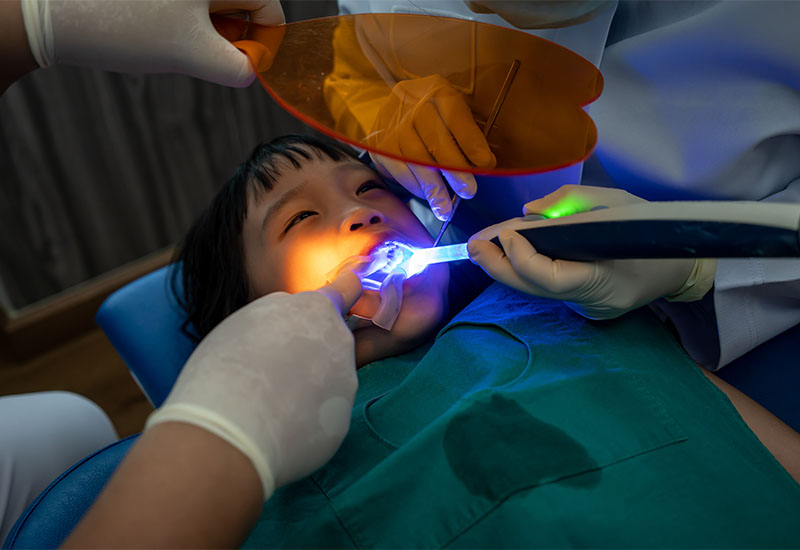
For a filling, the decayed tissue is removed, the cavity is cleaned, and the material is placed and shaped. Tooth coloured filling material is set with a curing light. For a crown, the tooth is trimmed down to a shape the crown can sit on, an impression or scan is taken, and a temporary crown is fitted while the permanent one is made.
Visits, Recovery and When to Call
Visits and timing
A single filling is usually one appointment. A crown is normally two, one to prepare the tooth and one to fit the finished crown, with a gap of a week or more between them while it is made. Veneers follow the same two stage pattern.
Afterwards
Numbness wears off over two to four hours. Avoid chewing on that side until it does, because a numb cheek is easy to bite. A new filling or crown can be sensitive to cold for a few days. A temporary crown needs care with hard and sticky food so it does not come off early.
Call sooner if
The bite feels high or uneven after a week, sensitivity is getting worse rather than better, a temporary crown comes off, or you get throbbing pain that wakes you at night. A high bite is a five minute adjustment and is not something to live with.
Deciding what is worth doing
Not every mark on a tooth needs treating, and not every old filling needs replacing. A small area of early decay may be watched rather than drilled. Ask what happens if a proposed treatment is delayed, because the honest answer is sometimes nothing much for a year and sometimes a root canal.
Keep reading
Questions About Cosmetic and Restorative Dentistry?
Describe the problem on the phone. That conversation is usually enough to work out the first appointment. Mandarin, Taiwanese, English and Japanese are spoken.